Book Worm: A Pro Review for Small Business Merch
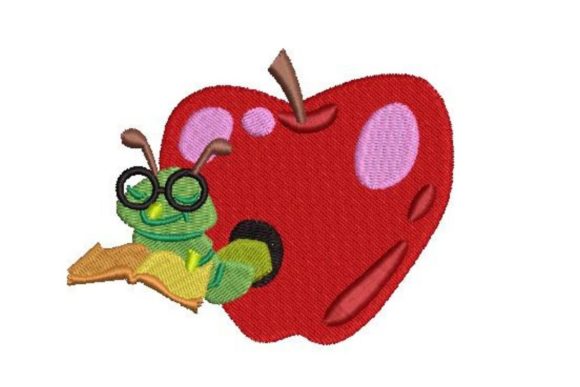
As an embroidery designer who spends countless hours digitizing and testing files for commercial use, I approach every new machine embroidery design with a critical eye. It is not just about whether a file looks cute on a screen; it is about how that digital embroidery file translates into a tangible asset for a brand. Today, I am reviewing "Book Worm," a design featuring a worm reading a book inside an apple. While the product description highlights its appeal for children's accessories and the Back To School season, my focus is on its viability for small business merchandise, branded patches, and professional apparel.
First Impressions: Visual Personality and Brand Fit
Upon loading the preview of Book Worm, the immediate impression is one of playful charm mixed with a classic educational vibe. The combination of an apple and a reading worm is a timeless motif, but the execution here leans heavily towards a friendly, handmade aesthetic rather than a corporate or rigid look. For businesses in the creative sector—such as independent bookstores, boutique cafes, tutoring centers, or craft studios—this design exudes warmth. It feels approachable and whimsical, making it an excellent candidate for brands that want to project a community-focused, family-friendly identity.
However, for a more high-end or minimalist brand, the illustrative nature of this embroidery file might feel too busy. The strength of Book Worm lies in its narrative quality; it tells a story of learning and curiosity. This makes it less suitable for a generic logo replacement and more effective as a secondary branding element, a seasonal campaign asset, or a specific product line marker for shops selling literary-themed goods.
Real-World Application for Small Business Merch
When evaluating Book Worm for actual production, the potential applications are diverse, provided the stitch count and density align with the chosen substrate. For a local bakery or coffee shop looking to launch a fall collection, this design could serve as a charming accent on limited-edition tote bags. An embroidered patch version of this design would be particularly versatile. Patches allow businesses to apply the design to various surfaces without committing to direct embroidery on delicate fabrics.
Consider a boutique clothing store creating a line of custom apparel for teachers or librarians. Book Worm works beautifully as a chest logo on a denim jacket or as a sleeve detail on a cardigan. For staff uniforms, such as aprons in a children's library or a daycare center, this design adds a touch of personality that standard text-only logos lack. It transforms a functional apron embroidery project into a conversation starter. Furthermore, for Etsy sellers and crafters, incorporating this design into ready-to-ship items like baby bibs, backpacks, or lunch boxes can significantly boost engagement during the Back To School rush.
The design also holds promise for event merchandise. If a community center is hosting a reading fair or a literacy fundraiser, Book Worm acts as a perfect unifying graphic for volunteer t-shirts or participant caps. The key here is positioning; it should be used where its playful nature enhances the brand message rather than diluting a serious corporate image.
Technical Considerations and Placement Challenges
While the artistic merit of Book Worm is clear, technical execution requires careful planning. The description mentions decorating accessories and clothes, but it does not specify the stitch count or the level of detail in the worm's facial features or the book's pages. In commercial embroidery, small details can easily become lost if the design is scaled down too aggressively.
If you intend to use this as a small patch or a pocket emblem on a cap, you must verify the stitch density. High-density areas on curved surfaces, like the front of a baseball cap, can cause puckering or thread breaks if the underlay is not sufficient. Similarly, applying this to textured fabrics like heavy canvas tote bags or waffle-knit aprons requires a robust stabilizer strategy. Without proper stabilization, the fine lines of the book pages might sink into the fabric texture, rendering the design muddy.
Color contrast is another critical factor. The design likely relies on specific thread colors to distinguish the red apple from the green worm and the colorful book. On dark uniforms, such as navy blue or black staff shirts, you must ensure the digitizer has included a solid underlay or a backing layer to prevent the garment color from showing through and altering the intended vibrancy. If the file does not include a dedicated dark-garment version, you may need to manually adjust the sequence or add a satin border to define the edges.
Impact on Brand Identity and Customer Trust
Integrating a character-driven design like Book Worm into your product lineup can humanize your brand. In a market saturated with generic logos, a well-executed embroidered character suggests attention to detail and a commitment to quality. It signals to the customer that the handmade product they are purchasing was crafted with care. This perception of quality directly influences buyer engagement and trust.
For small business owners, consistency is key. If Book Worm is used across multiple touchpoints—such as on packaging tags, staff name tags, and social media printable mockups—it creates a cohesive visual language. This repetition builds recognition. However, it is vital that the finished embroidery matches the digital expectation. A sloppy execution with loose threads or misaligned colors can damage a brand's reputation faster than no branding at all. Therefore, the professionalism of the final stitch-out is paramount.
Professional Designer Notes for Production
Before running a production batch of Book Worm, I strongly advise following these practical steps to ensure the best results for your clients:
- Test in Monochrome First: Stitch the design using a single thread color on white and dark fabric. This reveals the structural integrity of the digitizing and highlights any spacing issues between elements without the distraction of color.
- Verify Scalability: Check if the design retains clarity at smaller sizes, specifically for patch applications or hat fronts. If the book text becomes illegible, the design may need to be simplified or enlarged.
- Review Thread Contrast: Ensure the selected thread palette provides enough contrast between the worm, the apple, and the book to maintain definition from a distance.
- Confirm Hoop Size: Verify that the design fits within your available hoop options, especially if you are working with restrictive items like cap frames or small pouches.
- Select the Right Stabilizer: Match your stabilizer choice to the fabric weight. Cut-away stabilizer is often safer for stretchy fabrics or items that will undergo frequent washing, ensuring the design remains stable over time.
- Create Client Mockups: Before final approval, generate a realistic printable mockup or stitch a sample on the actual garment material to show the client exactly how the finished product will look.
- Check Licensing Terms: Since this is intended for small business merch, confirm the commercial licensing terms of the design assets. Ensure you have the right to sell physical goods featuring this embroidery.
In conclusion, Book Worm is a delightful addition to any embroidery library, particularly for those serving the education, childcare, or literary markets. Its success in a commercial setting depends entirely on thoughtful application and rigorous technical testing. By respecting the limitations of the medium and leveraging the design's inherent charm, small business owners can create memorable, high-value merchandise that resonates with their audience.