Pencil Case in the Hoop: A Craft Fair Designer's Review
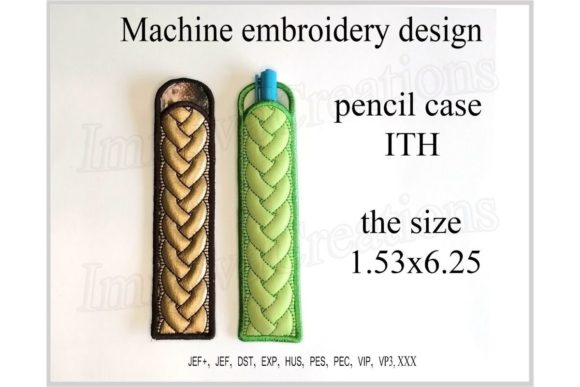
As I set up my booth for the upcoming weekend craft fair, surrounded by stacks of tote bags, aprons, tea towels, and handmade gifts, I am constantly evaluating which items will stop a customer in their tracks. Among my latest batch of samples is the Pencil Case in the Hoop. At first glance, this design feels undeniably cute and functional, hitting that sweet spot between playful and practical that defines successful Back To School merchandise. It does not scream "farmhouse rustic" or "elegant minimalism"; instead, it radiates a cheerful, modern energy perfect for kids and creative entrepreneurs alike. For those of us running small shops or Etsy stores, finding a design that translates well from a digital embroidery file to a tangible, sellable product is crucial.
First Impressions and Visual Appeal
The initial impact of the Pencil Case in the Hoop is its clarity. In a crowded market environment, buyers scan tables quickly. This design works because it is immediately recognizable. Whether stitched onto a bright canvas tote or a structured fabric pouch, the motif stands out without needing excessive explanation. It feels like a premium addition to a collection of handmade products because it implies utility. Customers do not just buy embroidery; they buy the idea of organization and style. When placed next to my embroidered patches and pillow covers, this design holds its own as a focal point rather than getting lost as a mere accent. The description mentions it comes in multiple sizes, which is a massive advantage for visual merchandising. I can display a large version on a market bag and a smaller iteration on a keychain or patch, creating a cohesive family of products that draws the eye across the entire display table.
Versatility Across Product Lines
One of the strongest selling points of this machine embroidery design is its adaptability. While the title suggests a pencil case, the application extends far beyond school supplies. I tested the concept mentally against my current inventory. On a tote bag design, it serves as a charming central graphic that appeals to teachers and students. For apron embroidery, it adds a whimsical touch to kitchen wear, suggesting that even cooking tools can be organized and cute. Even on tea towel embroidery, where detail can sometimes get lost in the weave, the bold lines of this design seem robust enough to maintain integrity.
For the Etsy seller looking to expand their catalog, this design offers excellent potential for printable mockups. Because the subject matter is universal, creating digital listings that show the design on various backgrounds is straightforward. It photographs well, which is essential for online conversion. Furthermore, as a commercial embroidery asset, it allows boutique makers to produce batch runs of giftable handmade items efficiently. The ability to scale the design means I can offer it as a standalone embroidered patch for iron-on applications or integrate it directly into the construction of a zippered pouch, adding significant perceived value to the finished product.
Production Realities and Stitch Quality
From a production standpoint, the Pencil Case in the Hoop appears to be a smart choice for high-volume crafting. The mention of a "quick tutorial attached" in the product description is a reassuring sign for those new to in-the-hoop projects, but for experienced designers, the real test lies in the stitch execution. When preparing for a craft fair, repeatability is key. I need designs that do not require constant thread changes or complex hoarding maneuvers that slow down the assembly line.
However, there are careful-use notes to consider. If the design features dense stitch areas, I must be vigilant about stitch density when working on textured towels or thick canvas. High density on heavy fabric can cause puckering if the wrong stabilizer is used. Similarly, if there are tiny details or small lettering included in the variant sizes, these may lose clarity when scaled down too far. It is vital to check the smallest size option before committing to a run of mini pouches. Additionally, thread contrast is critical; on dark fabric, lighter thread colors will pop, but one must ensure the underlay is sufficient to prevent the background fabric from showing through the satin stitches.
Practical Advice for the Embroidery Business Owner
Before listing this as a premier craft fair product, I recommend a rigorous testing phase. Do not assume the digital embroidery file will behave perfectly on every material. Test the design on scrap fabric that matches your intended final product. If you plan to sell caps, remember that curved surfaces require specific techniques and potentially a different hoop setup than flat goods. Check the spacing of elements to ensure that zippers or seams do not interfere with the embroidery once the item is assembled.
Confirm the hoop size requirements for each variation. Since the description notes multiple sizes, ensure your machine can accommodate the largest version without re-hooping, which saves time. Create at least one real mockup to photograph for your marketing materials; nothing sells a small shop product better than seeing it in a real-life context. Compare fabric colors to see which combinations make the design sing—sometimes a neutral background makes the thread colors vibrate, while a matching tone creates a subtle, premium look.
Finally, always confirm commercial licensing terms before selling finished products. While the description implies it is suitable for creating accessories, explicit permission to sell items made from the design assets is necessary for legal peace of mind. By treating the Pencil Case in the Hoop with this level of professional scrutiny, you transform a simple pattern into a reliable revenue stream. It enhances brand consistency, strengthens booth display appeal, and ultimately drives buyer engagement by offering a solution that is both beautiful and useful. In the competitive world of handmade markets, that balance is exactly what turns a browser into a buyer.