Periodic Table Alphabet E: A Designer's Review for Merch
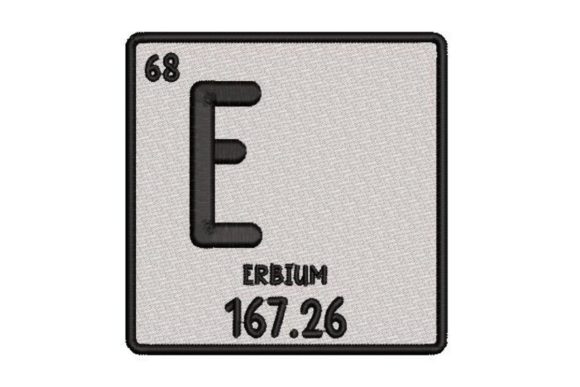
As an embroidery designer who spends most of my day digitizing logos and vetting files for small business clients, I approach every new machine embroidery design with a critical eye. It is not just about whether a pattern looks cute on a screen; it is about how it translates to fabric, how it withstands washing, and ultimately, how it serves the brand identity of the business using it. Recently, I took a close look at the Periodic Table Alphabet E, a design featuring Erbium (atomic number 68), to see if it holds up as a viable asset for commercial embroidery projects.
At first glance, the Periodic Table Alphabet E exudes a specific kind of professional charm. It feels modern yet classic, striking a balance between scientific precision and decorative appeal. For businesses in the education sector, particularly those capitalizing on the Back To School rush, this design is an obvious winner. However, its utility extends far beyond the classroom. The clean lines and structured layout suggest a premium quality that can elevate a handmade product from a simple craft item to a branded commodity. Whether you are running an Etsy shop selling science-themed apparel or a local boutique looking for unique cap embroidery, the visual personality of this file suggests versatility.
Real-World Application for Small Business Merch
When evaluating a digital embroidery file for business use, I always imagine specific scenarios. Let's say a creative studio or a specialized chemistry tutoring center wants to create staff uniforms. The Periodic Table Alphabet E works exceptionally well as a chest logo accent on work shirts. Its compact nature allows it to sit neatly above the pocket without overwhelming the garment. For a bakery or café with a "geeky" or intellectual brand vibe, this design could serve as a subtle sleeve detail on aprons, adding a touch of personality to the apron embroidery without interfering with the primary logo.
For makers focusing on small business merch, the potential for embroidered patch creation is high. Patches are currently a massive trend in custom apparel, and a well-executed element like Erbium can be the centerpiece of a collection. Imagine a line of tote bags where each bag features a different element; the tote bag design possibilities are endless. This approach encourages customers to collect multiple items, driving sales through visual consistency. Furthermore, for event merch at science fairs or university open days, this design acts as an instant identifier, fostering a sense of community among attendees.
The description notes that this embroidery file comes in multiple formats, which is crucial for commercial embroiderers who may be working with various machine brands. Whether you are producing a single handmade product for a client or running a batch of fifty caps, having the right format ensures the finished product maintains its integrity. The theme of chemistry appeals to a niche but dedicated audience, making it a strong candidate for targeted marketing campaigns.
Technical Considerations and Placement Strategy
While the aesthetic of the Periodic Table Alphabet E is strong, a professional review must address the technical challenges of execution. One area requiring careful attention is the scale. If you intend to use this as a tiny mark on a curved surface, such as the front of a structured cap, you must evaluate the stitch density. High density in a small area can lead to puckering, especially on lighter fabrics. Before committing to a large production run, it is vital to test the design at the intended size to ensure the lettering remains legible and the borders do not bleed together.
Fabric texture also plays a significant role. On textured materials like canvas tote bags or heavy denim, fine details in the atomic number or the element symbol might get lost if the thread weight is too light. Conversely, on smooth performance fabrics used for gym wear or lab coats, the design should pop beautifully, provided the correct stabilizer is used. I strongly recommend testing the design on the actual fabric your client intends to use. A printable mockup is useful for sales, but nothing replaces a physical stitch-out to check for registration issues.
Another consideration is color contrast. The periodic table style often relies on a specific color scheme to denote element groups. When adapting this for custom apparel in dark uniforms, you may need to adjust the thread colors to ensure the "Er" symbol and the number "68" stand out against the background. A lack of contrast can render the design invisible from a distance, defeating the purpose of brand recognition.
Impact on Brand Identity and Customer Trust
In the world of small business, perception is reality. Using a high-quality, coherent design like the Periodic Table Alphabet E signals attention to detail. It tells the customer that the brand cares about the nuances of its presentation. For a science supply store or an educational brand, this level of specificity builds trust. It shows that the business understands its subject matter deeply enough to incorporate it into their visual assets authentically.
Moreover, consistency in design assets is key to building a recognizable brand. If a company uses this element as part of a larger alphabet series across their packaging, social media graphics, and embroidered goods, it creates a cohesive visual language. This consistency enhances buyer engagement, as customers begin to associate that specific stylistic choice with the quality of the brand. It transforms a simple embroidery pattern into a strategic tool for market positioning.
Essential Notes for the Professional Embroiderer
Before you load this file into your machine for a client order, there are several practical steps you should take. First, always test the design in black and white. This removes the distraction of color and allows you to focus purely on the stitch structure and spacing. Check if the design holds up at the smallest size you plan to offer; if the details blur, you may need to request a resized version from the creator or simplify the stitch count manually if you have digitizing skills.
Confirm the hoop size requirements early. While many periodic table designs are compact, ensuring you have the correct hoop prevents last-minute scrambling during production. Additionally, verify the licensing terms. The description mentions it is perfect for chemistry lovers and includes multiple formats, but it does not explicitly state the commercial license limits. Always confirm you have the rights to use the digital embroidery file for resale or commercial embroidery projects before investing time and materials.
Finally, compare the Periodic Table Alphabet E beside other design assets in your library. Does it match the weight and style of your existing logos? If a client wants this added to a uniform that already features a complex crest, ensure the two do not clash visually. By treating this design as a integral part of a larger branding strategy rather than just a standalone decoration, you maximize its value for your small business clients.
In conclusion, the Periodic Table Alphabet E is a robust option for those looking to add a touch of scientific elegance to their product lines. With proper testing regarding stitch density, fabric compatibility, and color contrast, it can serve as a powerful component in brand identity strategies for schools, boutiques, and specialty retailers alike.